Resonating Bodies’ projects illuminate aspects of biodiversity through focusing on pollination ecology, with special attention paid to the intersection of native bees, habitat and coevolution of plants and pollinators of North America. Art installations and other activities reveal local biodiversity through investigating solitary bee and wasp nesting and life cycles, bumblebee colonies and their foraging activities, ultraviolet bee vision, pollinator-plant interactions, colour-coded DNA barcodes and more.
Resonating Bodies focuses on bees which are native to North America, and therefor does not include honey bees (genus Apis). We recommend you first check out the Bee Biodiversity page to get familiar with our native bees, most of which are solitary and don’t make honey or wax and don’t usually sting (much). Content is arranged into 4 basic sections: Bee Biodiversity, The Art (including Bee Trading Cards), Community and Resources. Handy tabs are at top, side and/or bottom. Credits include collaborating artists, biologists, venues and supporters.
Scroll down this page to view featured activities. Late-breaking news and more is also posted on Resonating Bodies | Facebook. On smaller screens scroll to the bottom for complete Contents.

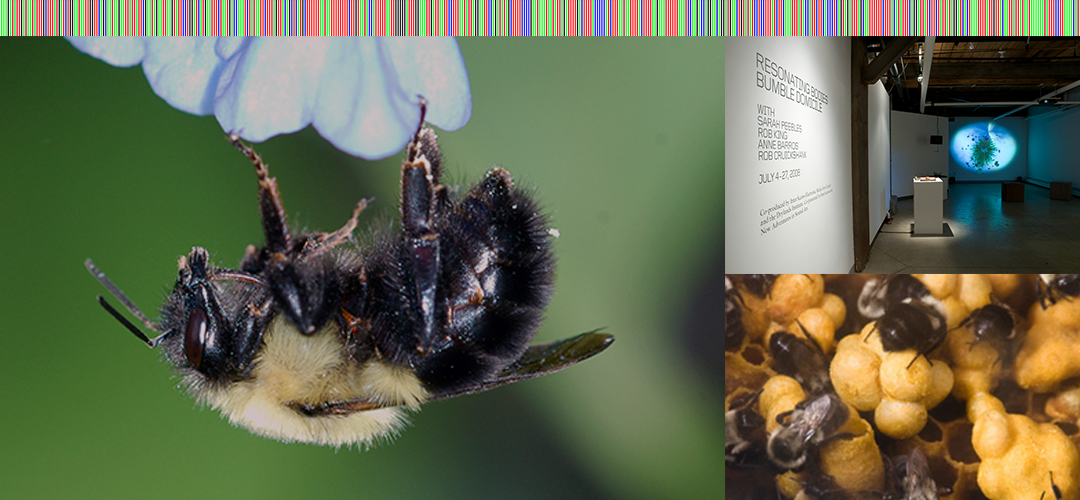
Toronto’s official bee: metallic green sweat bee Agapostemon virescens (female; via USGS lab). Top: Colour-coded DNA barcode image courtesy Barcode of Life Data Systems; Bombus impatiens (Amro Zayed), Bumble Domicile exhibit (Dave Kemp).
PROJECTS
Gallery Exhibit: These are a few of our Favourite Bees

Dwelling series of habitat walls for native bees
Dwelling: Shenandoah Valley
A Nest Site for Native Solitary Bees and Wasps Sarah Peebles, 2019 (permanent) State Arboretum of Virginia – Blandy Experimental Farm. Boyce, VA.
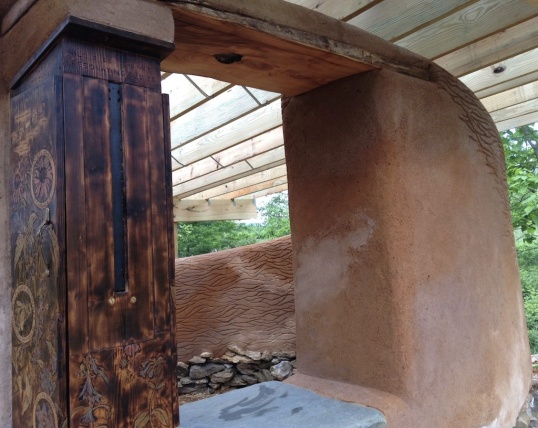
Habitat wall with sensory bee nest cabinet, accommodating native miner bees, cavity nesting bees & wasps, and carpenter bees (excavators).
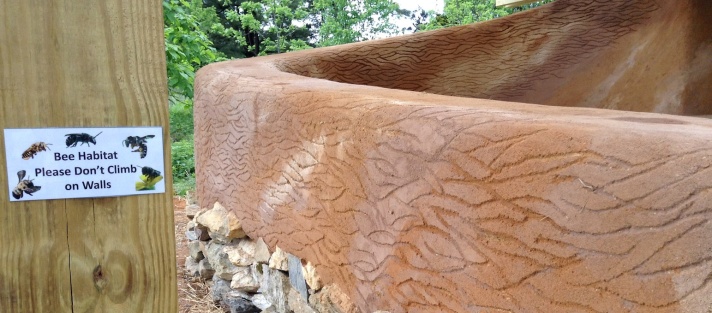
Sensory Bee Booths & Cabinets | Habitat Walls
Amplified habitat installations for solitary bees and wasps (sensory “bee hotels”)

Sonic Solitaries cabinets at High Park Nature Centre and Access Alliance
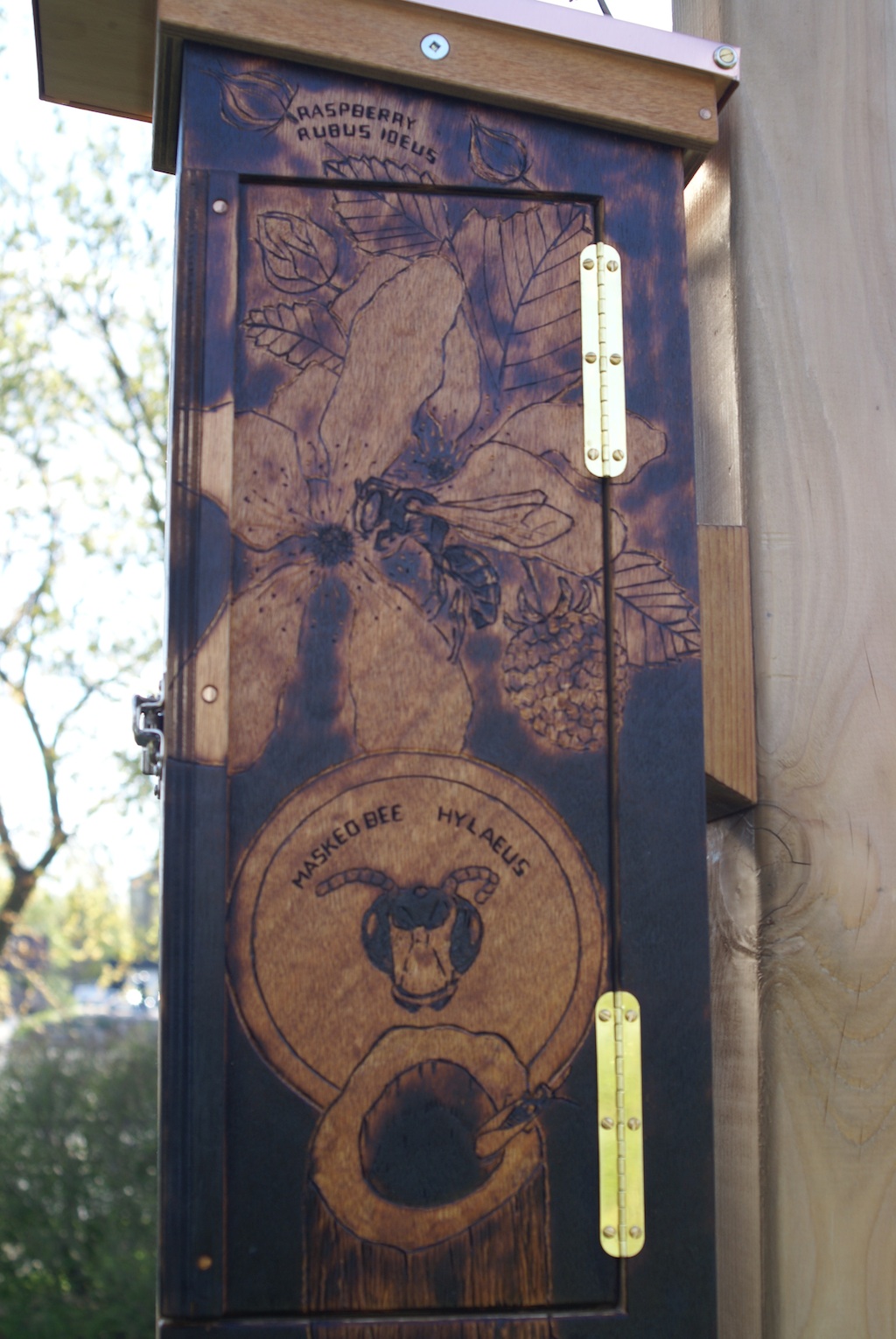


Pairing magnified views in tandem with amplified sound, cabinets facilitate an enhanced perception of their tiny inhabitants: solitary bees and wasps, and other nest biota in action, up close. Below, a pugnacious leafcutter bee nests alongside other leaf- and resin-using bees (click to enlarge). 

Sarah Peebles shares her thoughts and approaches to creating aesthetically compelling nest sites for native bees and wasps in this video:
Community Wild Bee Club & Talks
Two Clubs: East Toronto & West Toronto (Free!)

Wild Bee Buzz Talk series at High Park Nature Centre and Pollinator Week Wild Bees Buzz Talk at Access Alliance on June 18
Dwelling: Paint Branch Creek
An earthwork for solitary bees and wasps, at The University of Maryland Arboretum Outreach Center (Peebles and Kuder with Raduazo). 2015.


Lisa Kuder talks about the wild bees which live in Dwelling’s habitat wall and cabinet.
Sensory Bee Booths & Cabinets
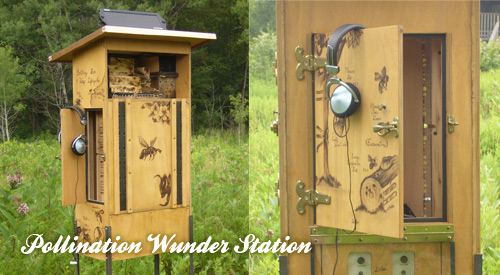
Videos of the Audio Bee Booth Pollination Wunder Station at the Tree Museum, 2011 (above) and its prototype (below) are best viewed with headphones.
Bee Trading Cards
Created as part of the Bumble Domicile exhibit and sold through Pollinator Partnership.

Bumble Domicile exhibit (2008)

Bumble Domicile exhibit (2008) highlighted distinct features of bumble bees through an observation hive, garden, visual and audio transformations, scent, touch, and biological information. This art installation – community outreach project featured works by Sarah Peebles, Rob King, Anne Barros and Robert Cruickshank, and was created in collaboration with bee biologists and other researchers in Canada and the USA. The video “Apiograph” below describes one of the works in the exhibit: “Apiograph” – an installation visualizing the pollinating activities of the gallery’s observation bumble bee colony . The images generated in “Apiograph” were projected on the gallery wall alongside other elements of the show.
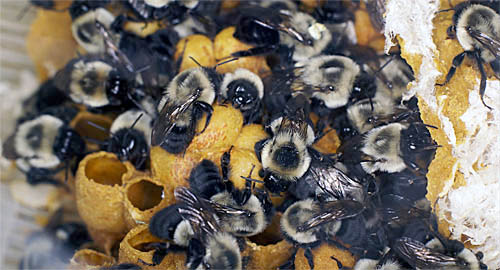
Odes to Solitary Bees
Video poems by Stephen Humphrey and Sarah Peebles
Wild, solitary-dwelling bees create nests, manipulate pollen and hang out in the Audio Bee Booth and other amplified habitat structures. Macro video with micro audio!
Solitary Dream Homes (for wild bees)
A grass roots initiative for Toronto and beyond
Create your own safe “bee condo” or habitat sculpture for wild solitary bees. Then, post it to our web gallery on Flickr via email – it’s easy.
Audio Bee Nesting Plank and Deluxe Log (2010)

Window Mini-Gallery (2009)

Credits are here.
 Resonating Bodies